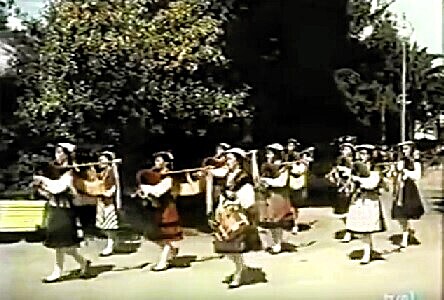
Source: "Así Es Galicia" (1964)
Source: "Así Es Galicia" (1964)
(Cantares Gallegos, 1863)
"Has de Cantar" makes extensive use of the affectionate diminutive form peculiar to the Galician language. The affectionate diminutive ends in iña (singular feminine) or iño (singular masculine) but not every word that ends in iña or iño is an affectionate diminutive.
All the words in "Has de Cantar" that end in iña or iño are listed below together with a range of possible translations and a short explanation of the choice that was made. Galician affectionate diminutives lend the translator an opportunity to add alliteration, internal rhyme and lyrical sharpness to the text. The objective is to find the best adjective, adverb or noun which conveys smallness, frailty, concern or affection depending on the context. This objective ends in a personal choice when more than one translation is available as is often the case. Sometimes an affectionate diminutive is best ignored because the context is unclear, because the extra term jars the smooth flow of the translation or because it makes the text too syrupy. The exercise can be fun, difficult and challenging. The extra work is worthwhile because it offers the English reader an approximation to what De Castro called "those tender words and those idioms never forgotten which sounded so sweet to my ears since the cradle and which were gathered up by my heart as its own heritage."
Dareiche unha proia (1.3.3)...
Proia
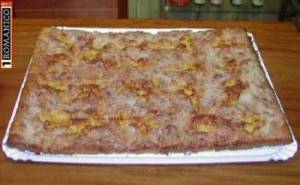
Source: C. Lliso. Proya de Pontedeume.
Rutas Románicas en España
By the bank of the river that runs mid the grass of the flowerful fields (2.2.2-4). This is the river Sar most likely.
In foam with pearls washed up by the sea (3.3.5-6). Tags the abundance of crustaceans on the seaside, particularly clams and mussels.
Dios santo (4.6.1), á Virxen (4.10.1). These colloquial terms are best translated to their English equivalents, "good Lord" (instead of "holy God") and "Our Lady" (instead of "the Virgin").
Composer Joaquín Rodrigo arranged the first four stanzas of Section IV of "Has de Cantar" to create the first movement of his "Rosaliana" score for soprano and orchestra. The piece is performed below by soprano Raquel Lojendio accompanied by the Principality of Asturias Symphony Orchestra. Carmen Rey and Nani García make a jazz adaptation of section III and of the first four stanzas of section IV on the second entry below.
Chingla from the 2023 album Cantarche ei Galicia
Raquel Lojendio and the Principality of Asturias Symphony Orchestra
Marta Pérez and Pedro Rodríguez (voice and piano)
|
Has de cantar, I
Has de cantar,
Canta, meniña,
Canta, meniña,
Papiñas con leite
Patacas asadas
¡Que feira, rapaza,
Canta si queres,
Canta si queres,
Co son da gaitiña,
Co son da gaitiña, II
Así mo pediron
Así mo pediron
Cantaban os grilos,
Campaban os prados,
Tocaban as gaitas.
¡Que cofias tan brancas!
¡Que ricos mandiles!
Tan vivos colores
De velos bulindo III
Lugar máis hermoso
Lugar máis hermoso
Galicia frorida,
De valles tan fondos, IV
Cantarte hei, Galicia,
Cantarte hei, Galicia,
Cal ela, ningunha
Cantarte hei, Galicia,
Xa canto, meniñas.
Dios santo premita
De noite, de día,
Quen queira me chame,
Buscaime, rapazas,
A todos, que á Virxen
Coidá que comenso... |
Sing yes you must, I
You must sing,
Sing, girl,
Sing, girl,
Pastry cream with milk
Potatoes baked
What a celebration, lass,
Sing if you will,
Sing if you want to,
With the sound of the bagpipe,
With the sound of the bagpipe, II
Thus they begged me
Thus they begged me
Sang the crickets,
The meadows flaunted,
The bagpipes played.
How white are the bonnets!
What rich aprons!
Such vivid colours
On watching them bound III
There has not been
Nowhere in the world could I find
Flowerful Galicia,
Of valleys so deep, IV
I'll sing to you, Galicia,
I'll sing about you, Galicia,
No other can sing
I'll sing about you, Galicia,
I start to sing, lasses.
May the good Lord grant
By night, by day,
Call to me whoever will,
Look for me, lasses,
Everyone, for I asked
Look out, I start... |
| Archived translations from Galician to English of poems by Rosalia de Castro |